
The IPTV and OTT sectors are moving quickly as new technologies and changing viewer habits rewrite how video is delivered and consumed. As streaming platforms innovate, stakeholders—from providers to advertisers—must track the shifts that affect quality, monetization, and reach. This article breaks down the main growth drivers in 2026: the technical advances behind smoother streaming, the ways VOD is reshaping revenue models, device trends that determine access, and how 5G and AI personalization are changing viewer expectations across regions.
Key Takeaways
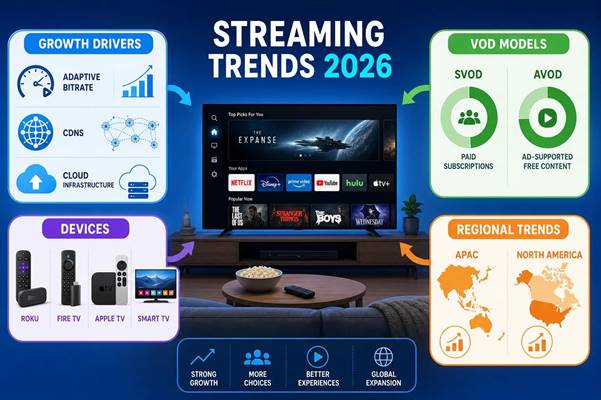
- IPTV and OTT markets are expanding fast, driven by streaming-tech improvements and evolving viewer preferences.
- Adaptive bitrate streaming and cloud infrastructure raise stream reliability and let providers scale to bigger audiences.
- Content delivery networks (CDNs) cut latency and keep HD video smooth during peak traffic.
- VOD growth fuels hybrid monetization—mixing subscriptions and ads—to broaden revenue streams.
- Smart TVs and platforms like Roku and Amazon Fire TV lead device penetration and simplify user access.
- 5G improves stream quality with higher speeds and lower latency, enabling more immersive formats.
- AI personalization boosts engagement by delivering more relevant recommendations and improving retention.
- Regional dynamics—strong IPTV expansion in Asia-Pacific and growing AVOD adoption in North America—are shaping global strategy.
- Subscription offerings are evolving to include flexible pricing and hybrid SVOD–AVOD plans to match diverse consumer needs.
What Are the Key IPTV and OTT Market Growth Drivers in 2026?
Growth is being driven by a mix of technical progress, broader internet access, and a clear shift in how people prefer to watch. Demand for higher-quality, interruption-free streams is prompting investment in CDN capacity, cloud encoding, and adaptive delivery. At the same time, the rise of mobile devices and smart TVs has made premium content available wherever viewers are, increasing daily consumption and opening new distribution opportunities.
How Are Streaming Technology Innovations Shaping Market Expansion?
Technical advances are the engine of market expansion. Adaptive bitrate streaming smooths playback by matching quality to connection speed, while cloud-based architectures let providers scale encoding and distribution without massive upfront infrastructure. These improvements reduce buffering, expand reach, and make premium experiences feasible for larger, more diverse audiences—helping convert trial users into subscribers.
What Role Do Content Delivery Networks Play in Streaming Quality?
CDNs are central to delivering consistent, high-resolution streams. By caching video closer to viewers and distributing load across edge servers, CDNs lower latency and speed up load times—especially important during live events or peak hours. As viewers demand better picture quality, robust CDN strategies become a must-have for reliable service delivery.
How Is Video On Demand Growth Influencing Subscription and Advertising Models?
VOD’s rise is reshaping commercial models across the industry. Traditional pay-TV is declining while flexible, on-demand offerings gain traction. That shift has pushed platforms toward hybrid approaches—combining subscription tiers with ad-supported options—to capture both price-sensitive and premium audiences.
Examples are already clear: platforms like Netflix and Prime rely on SVOD for steady recurring revenue, while YouTube and Pluto TV monetize scale with AVOD. Many platforms now experiment with mixed models—offering lower-priced, ad-supported tiers alongside ad-free subscriptions—to broaden their customer base.
Academic and market research has tracked these changes, showing that service quality and viewing experience remain key factors in consumer adoption and pricing strategies.
Market Dynamics of Video On Demand Service and Consumer Behavior
Despite early expectations, video on demand had not immediately become the dominant home distribution channel for audiovisual entertainment. Research models consumer choice assuming quality of service functions as a threshold factor in purchase decisions. Under that assumption, joint demand for VOD and broadband access is modeled, and the paper characterizes optimal price and quantity decisions for monopolist and duopolist content providers. The analysis extends to a two-period game-theoretic framework to address adoption timing and strategic entry.
The market for video on demand, 2008
What Are the Trends in Subscription Video On Demand and Advertising Video On Demand?
SVOD continues to compete on exclusive originals and premium catalogues, while AVOD gains momentum by offering free or lower-cost access supported by targeted ads. The two approaches coexist: SVOD attracts users seeking ad-free, high-quality content; AVOD scales reach and monetizes users who prefer low-cost access. This balance is shaping product roadmaps and content investments.
How Are Consumer Preferences Driving Changes in Video On Demand Services?
Consumers increasingly expect personalization and cross-device convenience. Platforms are investing in recommendation engines and mobile-first interfaces so viewers find relevant content faster. As personalization improves, watch time and loyalty typically rise—making data-driven UX and seamless app experiences central to VOD strategy.
Which Streaming Devices and Smart TVs Dominate the IPTV and OTT Market in 2026?
The 2026 landscape is device-driven: smart TVs with built-in apps plus streaming sticks and boxes (Roku, Fire TV, Apple TV) deliver most viewing sessions. That dominance shapes content discovery, ad formats, and technical requirements—so optimizing apps and experiences for these platforms is critical for market success.
What Are the Latest Smart TV Streaming Statistics and Device Penetration Rates?
Smart TVs now represent the primary home viewing platform in many developed markets. By 2026, smart TV ownership is projected to represent a large majority of households in advanced regions, making TV-optimized apps and UI a priority for providers aiming to maximize reach and monetization.
How Do Device Choices Affect User Experience and Content Consumption?
Device hardware and interface design shape discovery and retention. Faster processors, responsive UIs, and integrations like voice control or smart-home compatibility streamline navigation and promote longer sessions. Providers must test across device types to ensure consistent playback, responsive search, and smooth app performance.
What Impact Does 5G Technology Have on IPTV and OTT Streaming Services?
5G’s higher throughput and lower latency expand what’s possible for streaming—smoother 4K/8K playback on mobile, reduced startup time, and richer interactive formats such as low-latency live events and AR/VR experiences. Widespread 5G adoption will push platforms to offer higher-bitrate content and experiment with new engagement models.
How Does 5G Enhance Streaming Quality and Accessibility?
5G enables faster transfers and more reliable streams, making high-resolution and low-latency content accessible on the go. That improves mobile viewing quality and unlocks interactive and live-event experiences that were previously impractical at scale.
What Are the Regional Variations in 5G Adoption Affecting Market Trends?
Regions with fast 5G rollouts see quicker adoption of premium and interactive streaming services. Conversely, areas with limited 5G infrastructure may experience slower shifts toward high-bitrate and immersive content, underscoring the need for tiered delivery strategies that match local connectivity realities.
How Is AI-Driven Content Personalization Transforming IPTV and OTT Platforms?
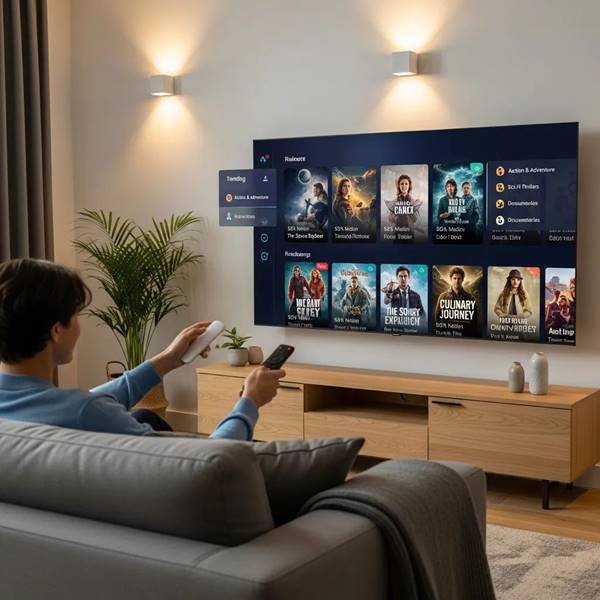
AI personalization is becoming a core differentiator. By using machine learning and analytics, platforms tailor recommendations, surface relevant marketing, and optimize content placement—driving higher engagement and longer retention. Personalization also helps ad targeting, improving ad relevance and CPMs for publishers.
What Are the Emerging AI Technologies Enhancing User Engagement?
Technologies like natural language processing, collaborative filtering, and predictive analytics power smarter recommendations and search. These tools identify viewing patterns, anticipate interests, and enable dynamic content promotion—helping platforms keep viewers engaged and discover new titles.
How Does Personalization Influence Consumer Streaming Behavior?
Personalized recommendations increase view time and platform loyalty by reducing friction in content discovery. When users consistently find relevant content, they explore more, engage longer, and are likelier to subscribe or remain active—directly supporting ARPU and retention metrics.
What Are the Regional Market Segmentation Trends in IPTV and OTT for 2026?
Regional patterns vary: Asia-Pacific shows strong IPTV subscription growth driven by rising internet access and localized content demand, while North America increasingly favors AVOD and hybrid models as consumers look for affordable, flexible options. These differences influence content licensing, ad strategy, and product design.
How Are Asia-Pacific IPTV Subscriber Increases Shaping the Market?
Asia-Pacific’s rapid subscriber growth—fueled by higher disposable income and greater broadband reach—is encouraging providers to localize content and expand regional partnerships. Local shows and tailored pricing are key to converting and retaining users in these markets.
What Are the North American Trends in AVOD Adoption and Revenue Forecasts?
In North America, AVOD is capturing more attention as advertisers shift budgets to streaming and viewers opt for lower-cost, ad-supported options. Revenue forecasts show AVOD becoming a substantial share of the market, prompting platforms to refine targeting and ad formats to maintain viewer satisfaction while increasing monetization.
Frequently Asked Questions
What are the main differences between IPTV and OTT services?
IPTV typically runs over managed networks and often involves operator-controlled infrastructure and set-top hardware, while OTT delivers video over the public internet to any compatible device. IPTV can offer tighter QoS guarantees; OTT provides broader device reach and greater consumer flexibility.
How is consumer behavior changing in relation to streaming services?
Consumers are favoring on-demand access, personalization, and cross-device continuity. Many are cutting traditional pay-TV in favor of streaming bundles, picking combinations of paid and ad-supported services that match cost and content preferences.
What impact does content quality have on consumer choices in streaming?
Content quality—both in production value and streaming performance—is a major deciding factor. High-resolution, exclusive content and a smooth playback experience drive subscriptions and positive word-of-mouth, while poor streaming quality undermines retention.
How are advertising strategies evolving in the streaming market?
Advertising is moving from broad reach to precision: data-driven targeting, frequency controls, and contextual placements improve ad relevance. AVOD models combine scale with better measurement, and platforms are experimenting with skippable formats, interactive ads, and moment-based targeting.
What role does user interface design play in streaming service success?
UI design directly affects discoverability and engagement. Clear navigation, smart recommendations, efficient search, and consistent cross-device experiences reduce friction and increase session length—making UI a strategic priority for retention.
How are subscription models adapting to consumer preferences?
Subscription models are diversifying: tiered pricing, ad-supported options, family plans, and regionalized pricing give consumers choice. Hybrid SVOD–AVOD plans let platforms capture both value-conscious users and those seeking ad-free experiences.
What future trends can we expect in the IPTV and OTT markets?
Expect deeper AI personalization, broader 5G-enabled interactivity, continued growth of AVOD, and more strategic partnerships between streamers and content creators. Platforms will compete on unique experiences—exclusive content, seamless discovery, and quality delivery—to stand out.
Conclusion
Staying current with IPTV and OTT trends is essential for any business operating in the streaming ecosystem. Advances in delivery tech, smarter personalization, and flexible monetization models are all reshaping how viewers find and pay for content. By aligning technical investments with regional strategies and user expectations, providers can improve engagement and grow sustainably in a crowded market. Explore our resources to deepen your understanding and keep pace with the streaming transformation.

0 Comments