

The IPTV landscape is evolving fast. Spotting where your content library falls short compared to competitors is essential to standing out. This guide walks through practical competitor analysis for IPTV—how to uncover under-served categories, spot emerging trends, and turn those gaps into growth opportunities. You’ll learn how to compare services on content, pricing, and user experience, plus best practices for building a stronger content strategy and the tools to keep an eye on the market. With the right insights, businesses can convert gaps into real strategic advantages.
What Are the Key Content Gaps in IPTV Services Compared to Top Competitors?
Understanding content gaps is the quickest way to improve user experience and win new subscribers. Many IPTV providers offer narrow libraries or repeat the same mainstream shows, which can frustrate viewers and increase churn. A focused competitor analysis reveals precise areas to expand your catalog and better match what audiences want.
Which IPTV Content Categories Are Underrepresented Among Leading Providers?

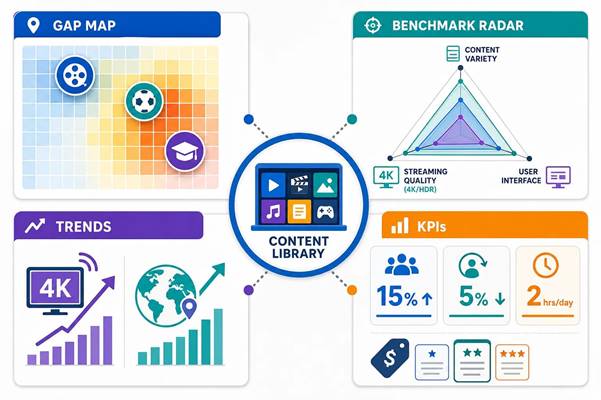
Several content areas remain thin across major IPTV platforms—niche genres like independent and arthouse films, regional and grassroots sports, and structured educational programming. These gaps are opportunities: localized and culturally specific content is gaining traction, and viewers increasingly seek programming that reflects their communities. Targeting these underrepresented categories can broaden reach and boost engagement.
How Do Emerging Trends Like 4K Streaming and Localized Content Create New Content Opportunities?
Trends such as 4K streaming and hyper-localized content are reshaping viewer expectations. Higher-resolution streams raise the bar for perceived quality, while localized programming builds loyalty among specific demographics. IPTV providers that invest in premium formats and culturally relevant content can craft unique offerings that attract and retain targeted audience segments.
How to Effectively Compare IPTV Competitors on Content, Pricing, and User Experience?
Comparing IPTV competitors requires a consistent framework that captures both qualitative and quantitative differences. By scoring content depth, pricing flexibility, and user experience features, you can map your positioning and identify the clearest paths to improvement.
What Metrics and Features Should Be Included in IPTV Service Comparison?
When comparing IPTV services, several key metrics should be included:
- Content Variety: Measure genre breadth, language options, and niche availability.
- Streaming Quality: Check supported resolutions (including 4K/HDR), bitrate consistency, and buffering rates.
- User Interface: Evaluate discoverability, recommendation quality, and navigation simplicity.
These metrics give a rounded picture of how services compare and help consumers and operators make informed choices.
How Do Pricing Models and Subscription Tiers Influence Competitive Positioning?
Pricing strategy shapes perceived value. Flexible options—tiered subscriptions, pay-per-view, or bundled offers—appeal to different audience segments and can reduce barriers to trial. Strategic promotions and bundled content packages also enhance value perception, so providers should continually test and refine pricing to stay competitive.
What Are the Best Practices for Developing an IPTV Content Strategy to Address Market Gaps?
A focused content strategy combines market research, user feedback, and technical readiness. Prioritize gaps that align with your brand and audience, pilot new categories, and measure performance closely to scale what works.
How Can Semantic SEO and Structured Data Enhance IPTV Content Visibility?
Semantic SEO and structured data help search engines understand and surface your content more effectively. Tagging shows, episodes, genres, and talent with clear metadata improves discoverability and can drive organic subscriber growth by making relevant titles easier to find.
Which User Experience Features Drive Engagement and Differentiate IPTV Services?

Features that meaningfully boost engagement include smart personalized recommendations, clear and fast navigation, and responsive customer support. These elements reduce friction, surface relevant content, and keep viewers coming back. Continuous UX testing and quick iteration are key to staying ahead.
How Does the IPTV Competitive Landscape Evolve with Market Trends and Technological Advances?
The IPTV market shifts as consumer habits and technologies change. Providers that monitor trends and adopt adaptable delivery models can capture new viewers and defend against disruption.
What Are the Impacts of Hybrid IPTV-OTT Services on Content and Service Offerings?
Hybrid IPTV-OTT models blend live linear channels with on-demand OTT catalogs, giving viewers flexibility and a broader content mix. This hybrid approach forces providers to balance live programming with deep on-demand libraries, and to optimize streaming and rights strategies accordingly.
How Do Real-Time Content Updates and Personalized Content Shape Competitive Advantages?
Real-time updates and personalization keep the platform feeling fresh and relevant. Timely content curation and tailored recommendations increase session time and discovery, helping providers surface new titles and reduce churn through ongoing engagement.
Which Tools and Metrics Are Essential for Monitoring IPTV Competitor Content Gaps and Market Opportunities?
Effective monitoring combines analytics platforms, competitive catalogs, and audience insights. The right mix of tools helps you map content overlap, track trends, and prioritize investments that close strategic gaps.
How to Use Entity Tracking and Knowledge Graphs for IPTV Competitor Analysis?
Entity tracking and knowledge graphs reveal relationships—between titles, talent, genres, and viewer segments—that aren’t obvious in flat lists. These tools help you spot white spaces in content ecosystems and discover thematic clusters worth investing in.
What KPIs and Analytics Best Measure IPTV Content Gap Closure and User Engagement?
KPIs to watch include subscriber growth, churn, and engagement metrics like average watch time and retention by cohort. Tracking these indicators shows whether new content investments are closing gaps and driving sustainable growth.
| Metric | Description | Value |
| Subscriber Growth | Increase in active subscribers | 15% YoY |
| Churn Rate | Percentage of subscribers lost | 5% |
| Viewer Engagement | Average watch time per user | 2 hours/day |
This table highlights the core metrics to monitor so IPTV services remain competitive and responsive to shifting viewer demand.
Frequently Asked Questions
What are the benefits of offering localized content in IPTV services?
Localized content boosts relevance and loyalty. Viewers are likelier to subscribe and stick around when they find programming that reflects their language, culture, and interests. It also helps providers stand out in crowded markets by serving niche audiences that major platforms may overlook.
How can IPTV providers leverage user feedback to improve their content strategy?
User feedback is a direct source of insight—collect it through surveys, in-app prompts, social listening, and support channels. Analyze trends in requests and complaints to prioritize categories and features, then pilot changes and measure impact. Acting on feedback builds trust and improves retention.
What role does technology play in enhancing IPTV user experience?
Technology underpins the viewing experience: from adaptive bitrate streaming that reduces buffering to AI-driven recommendations that surface relevant titles. Investing in backend stability, personalization, and performance tuning delivers a smoother, more engaging service.
How can IPTV services effectively market their unique content offerings?
Promote unique content with targeted campaigns—social media, influencer partnerships, trailers, and sample episodes. Highlight exclusives and niche programming that speak to specific audiences. Use SEO and analytics to refine messaging and find the channels that drive the best acquisition and retention results.
What are the challenges IPTV providers face in closing content gaps?
Closing gaps often hits practical limits: licensing costs, rights complexity, and tight budgets can restrict content acquisition. Competition for premium rights is fierce, and smaller providers must be strategic—focus on niche exclusives, local partnerships, or original formats that deliver high engagement without prohibitive costs.
How do subscription models impact customer retention in IPTV services?
Subscription models shape perceived fairness and flexibility. Tiered pricing, introductory offers, and bundled content can reduce churn by matching different user needs. Providers that regularly test pricing structures and adapt based on user behavior tend to retain subscribers more effectively.
Spotting and closing content gaps not only improves viewer satisfaction but also creates room to capture new market share. By prioritizing underrepresented categories and embracing relevant trends, IPTV providers can differentiate their services. A data-driven content strategy informed by user insights will drive engagement and retention—start testing focused content experiments today to lift your service’s appeal.
Conclusion
Identifying content gaps is a practical way to boost user satisfaction and open new market opportunities. Focus on underrepresented categories, adopt emerging trends like higher-resolution and localized content, and back decisions with user data. A clear, iterative content strategy will help you stand out and grow—begin experimenting with targeted content solutions to elevate your IPTV offering.

0 Comments