

The way we watch TV has changed. Over-the-top (OTT) streaming services deliver shows and live channels over the internet, challenging traditional cable and satellite packages. This guide breaks down the main differences—flexibility, content choices, and cost—so you can see what matters when comparing streaming to pay TV. We’ll cover on-demand and live options, device compatibility, pricing implications, and the trends likely to shape viewing in the years ahead.
Key Takeaways
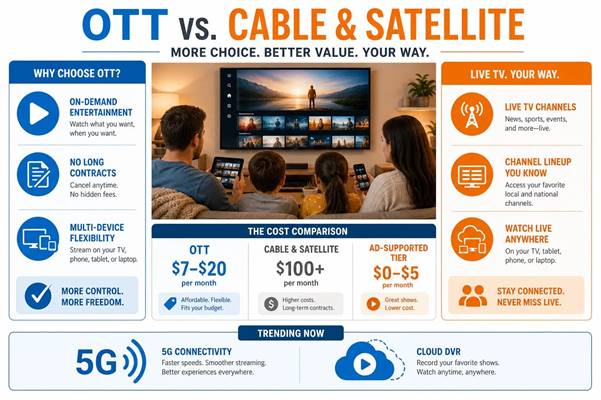
- OTT services stream over the internet, making them more flexible than cable or satellite.
- Most OTT plans are month-to-month with on-demand libraries—no long contracts or cancellation penalties.
- Streaming platforms mix original series, movies, and live-channel options for broader content variety.
- OTT subscriptions typically cost between $7 and $20 per month, versus over $100 for many cable bundles.
- Major OTT platforms work across smart TVs, streaming sticks, consoles, and mobile devices for seamless viewing.
- Several streaming services now include live TV channels, directly competing with cable and satellite lineups.
- Ad-supported and hybrid pricing models make streaming more affordable and increase access for many viewers.
- New tech—like 5G and cloud DVR—continues to improve streaming quality and convenience.
- The rise of OTT is shifting viewer preferences toward flexible, cost-conscious, and personalized TV experiences.
How OTT streaming differs from cable and satellite TV
OTT services deliver video over the internet rather than through cable lines or satellite dishes. That changes the user experience: viewers can watch where and when they want, often without a long-term service contract. OTT platforms tend to emphasize on-demand libraries and original content, while traditional pay TV still centers on live broadcasts and fixed channel bundles.
How OTT platforms offer flexibility compared to cable and satellite
Flexibility is a core benefit of OTT. Most streaming services use month-to-month subscriptions, so you can start, pause, or cancel easily. They support many devices—smartphones, tablets, smart TVs, and computers—so you’re not tied to a single set-top box or location. That freedom makes it simple to mix and match services based on what you actually watch.
What content is available on OTT versus cable and satellite?
OTT libraries typically include large catalogs of on-demand movies and series, plus growing amounts of original programming from services like Netflix, Hulu, and Amazon Prime Video. Traditional cable and satellite still focus heavily on live TV—news, sports, and scheduled programming—and may offer a more limited on-demand selection. Streaming services also update their catalogs more frequently, giving you faster access to new releases and exclusive titles.
How OTT costs compare to cable and satellite
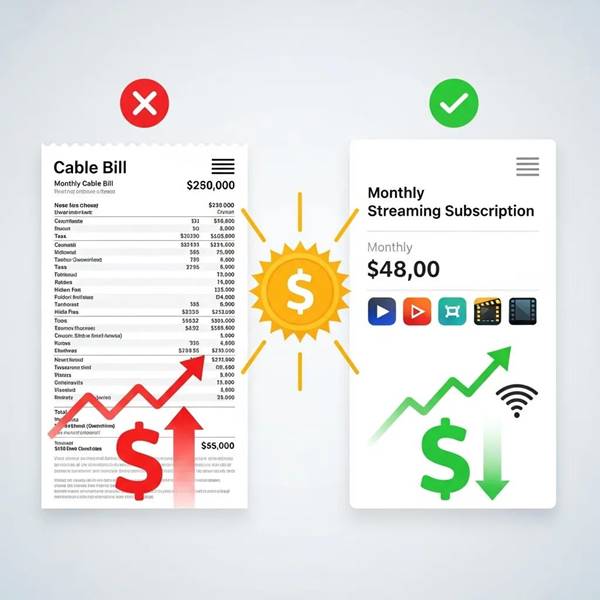
On average, OTT streaming is more affordable than traditional pay TV. Typical streaming subscriptions fall in the $7–$20 per month range, while many cable packages exceed $100 a month. That price gap makes OTT a strong option for budget-conscious viewers, especially when combined with ad-supported tiers and selective subscriptions for the channels you actually use.
Typical pricing models for OTT and pay TV subscriptions
Streaming services use several pricing approaches: monthly subscriptions, ad-supported (cheaper) tiers, and bundled packages. For example, Hulu’s basic, ad-supported plan is $7.99 per month, while the ad-free tier runs around $14.99. Cable providers typically sell a base bundle of channels that can quickly increase in price with add-ons and equipment fees. The table below highlights common pricing styles across services.
| Service | Pricing Model | Content Type |
| Netflix | Monthly subscription | Original series, movies |
| Hulu | Ad-supported ($7.99) | TV shows, movies |
| Comcast Xfinity | Cable package | Live TV, on-demand content |
This snapshot shows how OTT can deliver significant savings while still providing a wide range of programming.
How consumers can save by choosing OTT over cable or satellite
Savings come from lower monthly fees, fewer hidden charges, and the ability to subscribe only to services you use. Since many OTT plans don’t require long-term contracts, it’s easy to trial a service and cancel if it doesn’t fit. Picking specific streaming apps instead of a large channel bundle helps avoid paying for channels you never watch.
Which devices support OTT streaming and how user experience compares
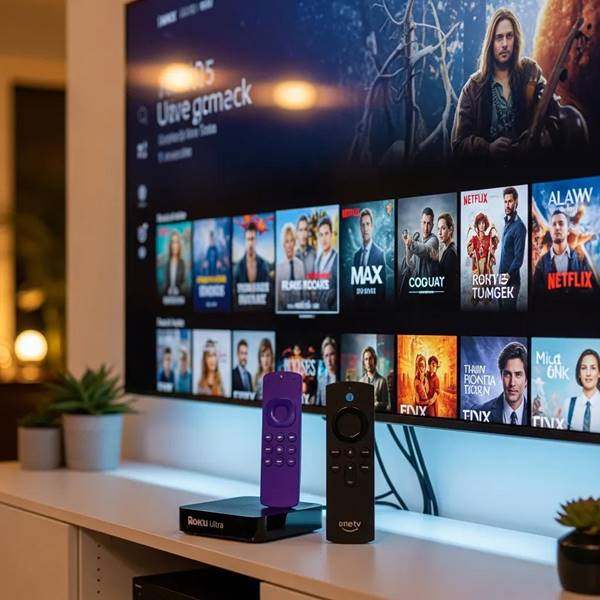
Device choice affects your streaming experience. Most major OTT platforms run on a wide variety of hardware—smart TVs, streaming sticks, gaming consoles, and mobile devices—so you can pick what fits your setup. A consistent app experience across devices makes switching between screens smooth and convenient.
What streaming devices are compatible with major OTT platforms?
Popular devices that support major streaming services include:
- Roku: A straightforward, easy-to-use interface with wide app support.
- Amazon Fire TV: Deep integration with Alexa and a broad app ecosystem.
- Smart TVs: Many newer TVs come with built-in apps for top streaming services, removing the need for extra hardware.
How device compatibility affects viewing convenience
Good device compatibility means you can start a show on one screen and pick it up on another without hassle. It also gives households flexibility—kids on tablets, adults on the living room TV—while keeping profiles and recommendations in sync. That cross-device continuity is a major convenience advantage for OTT platforms.
Can OTT platforms provide live TV, and how does it compare to cable and satellite broadcasts?
Yes—many OTT providers now offer live TV packages, bringing news, sports, and scheduled programming to streaming apps. For viewers who want live channels without a cable subscription, OTT live services are a compelling alternative.
Which OTT services offer live TV channels?
Notable streaming services that include live TV are:
- Hulu + Live TV: Combines Hulu’s on-demand library with live channel options.
- YouTube TV: Offers a broad channel lineup including sports and local networks.
- Sling TV: Lets you build customizable channel packages to match your needs.
How reliable is live TV streaming compared to satellite and cable?
Live streaming reliability has improved a lot, though issues like buffering can still occur during peak usage or on slow internet connections. Many services invest in robust delivery networks and adaptive streaming tech to reduce interruptions. For most users with a stable internet connection, the convenience of live OTT outweighs occasional hiccups compared with traditional satellite or cable.
Emerging trends and the future outlook for OTT versus cable and satellite TV
Streaming continues to evolve quickly, and several trends are shaping how viewers access content. Expect more flexible pricing, improved streaming quality, and tighter competition as platforms seek to retain attention and subscribers.
How ad-supported and hybrid OTT models are changing the market
Ad-supported and hybrid plans make premium content more affordable by trading a cleaner viewing experience for lower prices. As more platforms offer these options, competition increases, which often results in better prices and more varied content for consumers.
What impact will technologies like 5G and cloud DVR have on streaming?
5G promises faster speeds and lower latency, which can improve live streaming and mobile viewing. Cloud DVR removes the need for physical recording hardware and makes it easier to save and replay programs across devices. Together, these technologies will continue to raise the convenience and quality of OTT viewing, accelerating cord-cutting for many households.
Frequently Asked Questions
What are the advantages of using OTT services for families?
OTT services let families customize what they subscribe to and when they watch. Parents can find kids’ programming and educational shows, while adults choose movies and series. Features like multiple profiles, parental controls, and personalized recommendations make it easy to tailor the experience for each family member.
How do OTT services handle content licensing and availability?
Streaming platforms negotiate licenses with studios and distributors, so what’s available can vary by country and change over time. To reduce gaps, many services produce original content that stays in their library. If you’re looking for a specific show or film, check the service’s catalog for your region.
Are there any hidden fees associated with OTT subscriptions?
Most OTT subscriptions are straightforward, without the installation or equipment fees common to cable. Still, some platforms charge extra for premium add-ons, rentals, or ad-free tiers. Read the pricing details before subscribing to avoid surprises.
Can I access international content through OTT platforms?
Many streaming services offer foreign films and series, and options for subtitles or dubbing. Availability depends on regional licensing, so some international titles may be limited or unavailable in certain countries.
How do OTT services impact traditional cable and satellite providers?
OTT has pushed many viewers away from cable and satellite, prompting traditional providers to adapt—often by offering their own streaming apps, mobile plans, or bundles that include OTT services. This competition is driving innovation and better choices for consumers.
What should I consider when choosing an OTT service?
Think about the types of shows and movies you watch, monthly cost, device compatibility, and useful features—offline downloads, multiple profiles, and parental controls. Trial periods can help you test the interface and content before committing.
Conclusion
Switching to OTT can offer real benefits: greater flexibility, lower costs, and more personalized content. As streaming options grow and technology improves, many viewers find they get better value and convenience than with traditional pay TV. Explore the available services, compare features and prices, and pick the mix that fits your viewing habits—then enjoy TV on your terms.

0 Comments