
The digital media landscape moves fast. Whether you’re a viewer, developer, or industry pro, knowing the key terms behind IPTV (Internet Protocol Television) and OTT (Over‑The‑Top) streaming helps you make smarter choices and follow technical discussions with confidence. This glossary breaks down the core concepts—how these services work, how they differ, the protocols and delivery methods involved, and the emerging tech shaping the future of streaming. Use it to improve your viewing experience and to talk about streaming with clarity.
Key Takeaways
- IPTV sends television over Internet Protocol, usually via subscription packages and requiring a stable broadband connection.
- OTT delivers internet-based content without cable or satellite—accessible on smart TVs, phones, tablets, and streaming devices.
- HLS and DASH are common adaptive-bitrate protocols that adjust video quality to match connection speed.
- Multicast pushes one stream to many users; unicast creates individual streams—this difference has a big impact on bandwidth.
- Core terms to know include bitrate, codec, latency, plus acronyms like VOD, SVOD, and AVOD.
- CDNs improve performance by caching content closer to users, reducing latency and buffering.
- Low-latency streaming and edge computing are improving real-time delivery for live events and interactive applications.
- IPTV and OTT work across smart TVs, streaming boxes, smartphones, and tablets for flexible access.
- Future trends include 5G, AI-driven personalization, and immersive formats like VR/AR.
What is IPTV and How Does It Differ from OTT Streaming?
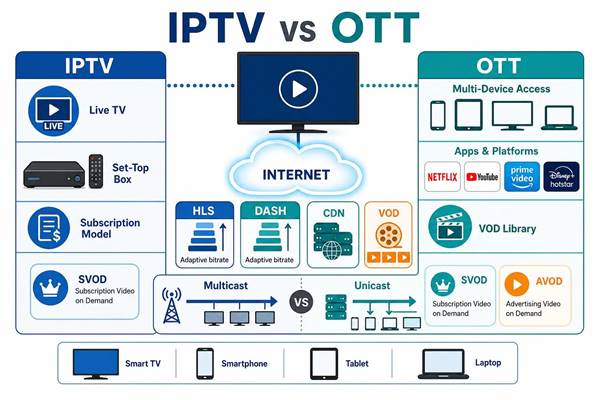
IPTV delivers television content over IP networks, letting users stream live channels and on‑demand libraries—often through a set‑top box and a subscription. OTT bypasses traditional pay TV infrastructure and delivers video over the open internet directly to apps and devices. The difference matters for how content is provisioned, controlled, and experienced by viewers.
Definition and Core Concepts of IPTV and OTT
IPTV typically relies on managed broadband and operator-controlled infrastructure to deliver channel packages and on‑demand content. It often includes features like electronic program guides, DVR, and guaranteed bandwidth. OTT services run over the public internet and can be subscription-based, ad-supported, or free. OTT gives viewers more device choice and flexibility, but quality can vary with network conditions.
This shift from broadcast and cable toward internet-first delivery is central to how modern TV services are built and consumed.
IPTV Delivery Networks: Terminology, Challenges, and Efficiency
With digital video broadcasting and high‑speed broadband, IPTV has emerged as a new generation of TV services. IPTV uses broadband networks to deliver TV to subscribers. From the provider’s perspective, the key challenge is designing delivery networks that use resources efficiently while keeping service costs down.
A survey on content awareness challenges in IPTV delivery networks, SM Fati, 2019
Key Differences Between IPTV and OTT Technologies
The main differences come down to delivery and control. IPTV often runs on managed networks with dedicated bandwidth and operator control, which can mean steadier quality for live TV. OTT operates over the general internet and is more device-agnostic, offering convenience and broad distribution but sometimes variable performance depending on connection speed and congestion.
Which Streaming Protocols Should Beginners Know?
Streaming protocols determine how audio and video move from server to player. They shape latency, resilience to network changes, and playback quality—so they’re worth understanding if you’re exploring IPTV or OTT.
Understanding HLS, DASH, and Adaptive Bitrate Streaming
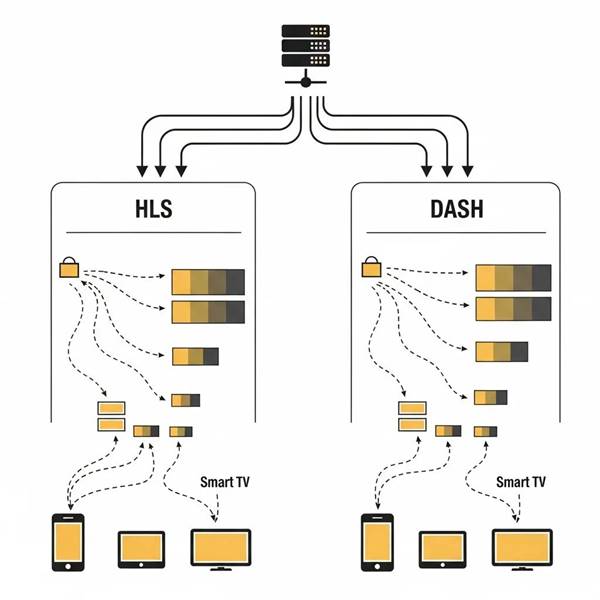
HLS (HTTP Live Streaming) and DASH (Dynamic Adaptive Streaming over HTTP) break video into short segments and switch between different bitrates as network conditions change. This adaptive‑bitrate approach keeps playback smooth: when bandwidth drops the player requests a lower bitrate segment; when bandwidth recovers it steps up quality.
How Multicast and Unicast Delivery Methods Work
Unicast creates a separate stream for each viewer—simple but bandwidth‑heavy at scale. Multicast sends one stream to many subscribers simultaneously, which is far more efficient for live linear TV but requires network support. Choosing between them depends on the service model and the infrastructure available.
What Are Common IPTV and OTT Terminology and Acronyms?
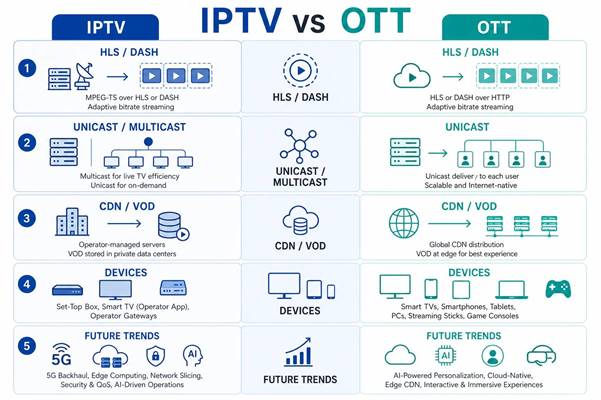
Knowing the basics makes it easier to read specs, compare services, and troubleshoot issues. Below are the most useful terms and acronyms to keep handy.
Essential Streaming Technology Glossary Terms
- Bitrate: The data rate of a video stream (kilobits or megabits per second). Higher bitrates usually mean better quality but require more bandwidth.
- Codec: Software or hardware that compresses and decompresses audio/video (for example, H.264, H.265, or AV1).
- Latency: The time delay between sending and receiving content—critical for live events and interactive apps.
Frequently Used IPTV and OTT Acronyms Explained
- VOD: Video on Demand — content you can watch anytime.
- SVOD: Subscription Video on Demand — access to a library through a paid subscription (e.g., Netflix).
- AVOD: Advertising Video on Demand — free or lower‑cost access supported by ads.
How Do Content Delivery Networks and Video on Demand Function?
CDNs and VOD are foundational to fast, reliable streaming. CDNs reduce latency and buffering by serving content from servers close to viewers, while VOD platforms organize and deliver on‑demand libraries across devices.
Role of CDNs in Streaming Video Delivery
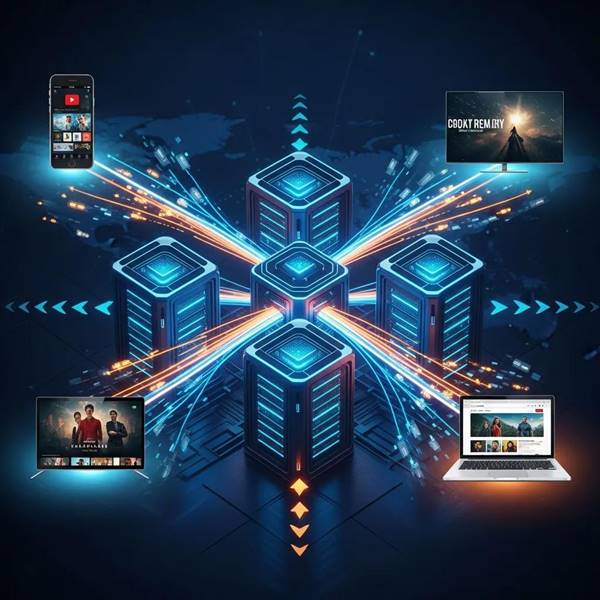
CDNs cache assets at edge locations to shorten delivery distance, cut down buffering, and distribute traffic during peak demand. Major CDN providers—Akamai, Cloudflare, Amazon CloudFront, and others—offer specialized features for live and on‑demand streaming.
Basics of Video on Demand Services and Use Cases
VOD services store and stream content whenever viewers want it. They power entertainment platforms, educational portals, and corporate training systems. VOD gives users control over what and when they watch, making it ideal for binge viewing, time‑shifted content, and libraries of evergreen material.
What Emerging Technologies Are Shaping IPTV and OTT in 2024 and Beyond?
Streaming continues to evolve. New networks, processing models, and codecs are improving quality, reducing latency, and enabling richer interactive experiences.
Impact of Low-Latency Streaming and Edge Computing
Low‑latency streaming is key for sports, live auctions, and cloud gaming where delays matter. Edge computing complements this by processing and caching data closer to users, shaving milliseconds off delivery and making live interactions feel immediate.
Trends in IPTV and OTT Market Growth and Innovation
Growth is driven by better mobile networks (including 5G), smarter personalization using AI, and more efficient codecs that deliver higher quality at lower bitrates. Expect to see more immersive formats—VR/AR—and tighter integration between content, advertising, and analytics.
Where Can Beginners Find Answers to Common IPTV and OTT Questions?
Start with clear, reliable sources and practical tools: vendor docs, CDN provider guides, industry whitepapers, and community forums. Use the glossary as a reference while you learn.
Glossary Usage Tips and Visual Aids for Better Understanding
To get the most from this glossary, try these approaches:
- Familiarize Yourself with Terms: Revisit core entries regularly until the concepts stick.
- Use Visual Aids: Diagrams and flowcharts make protocols and delivery flows easier to grasp.
- Engage with Online Communities: Forums, developer docs, and Q&A sites help you see real‑world examples and troubleshooting tips.
Frequently Asked Questions
What are the advantages of using IPTV over traditional cable services?
IPTV adds flexibility and features not typically available with legacy cable—on‑demand libraries, pause/rewind, personalized lineups, and often lower cost options by picking specific packages. Because IPTV can run on managed networks, it can also deliver consistent quality for live TV.
How does internet speed affect IPTV and OTT streaming quality?
Bandwidth and stability are essential. Higher and more consistent internet speeds allow higher resolutions and fewer interruptions. IPTV often relies on guaranteed bandwidth, while OTT players adapt stream quality up or down based on available bandwidth, which can lead to fluctuations in video quality.
Are there any legal concerns with using IPTV services?
Yes. Using services that distribute copyrighted content without licensing can expose both providers and users to legal risk. Always choose reputable providers that clearly state licensing and rights for the content they deliver.
What devices are compatible with IPTV and OTT services?
Both service types work across smart TVs, streaming sticks and boxes (Roku, Fire TV, Apple TV), smartphones, tablets, and desktop browsers. IPTV providers may require a dedicated set‑top box or app, while many OTT services run directly via apps on existing devices.
How do I troubleshoot common issues with IPTV and OTT streaming?
Start with a few basics: check your internet speed and connection stability, restart your router and device, and update the streaming app. If buffering persists, try lowering playback quality or testing a wired connection. For persistent problems, consult the service’s help center or logs for error codes.
What are the future trends in IPTV and OTT technologies?
Expect faster networks (5G), smarter personalization driven by AI, better compression codecs, and more immersive experiences using VR/AR. Low‑latency delivery and edge computing will also make interactive and real‑time streaming more practical.
Conclusion
Grasping the core terms and concepts behind IPTV and OTT gives you the context to choose services wisely, follow technical discussions, and troubleshoot common issues. Use this glossary as a living reference: revisit entries as you encounter new technologies, and explore the resources mentioned here to deepen your knowledge. Start exploring—better streaming choices begin with clear understanding.

0 Comments